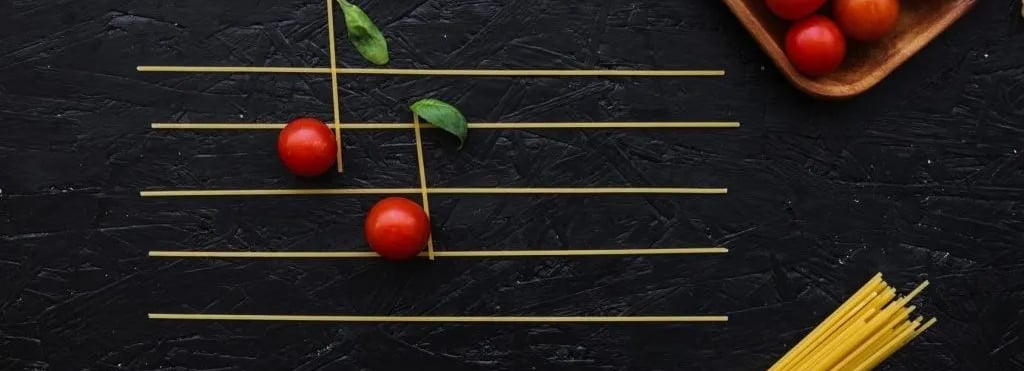
Compose and Cook Away
Movement restrictions and self-isolation don’t have to spell boredom. Countless people have taken to using their leisurely hours in pursuit of things creative and inspiring. What does the psychological literature say about the importance of our non-work hours? And can cooking be good for your emotional well-being?
EMOTION SCIENCE ARTICLES
What Do You Do When You are Not Working?
Under self-imposed isolation as you are reading this? You are not alone. Much of the world remains under strict distancing and isolation restrictions because of the novel coronavirus pandemic. And while some countries are reporting improvements in combating the virus, many of us find ourselves working from home, juggling between our anxieties and staying in touch with our loved ones. Others have resumed work but are required to adhere to the strict operating protocols. Numerous articles have been written about managing anxieties during the pandemic; advice columns on being mindful of one’s consequences and encouragements to be grateful for what one has, to tips on how to stay productive during these changing times. But less is said about what we do with all our free time. The move toward remote work also requires us to think about how best to strike that balance between “work” and “non-work,” on how to limit distractions for greater productivity, and how to manage expectations of work outcomes during these times. Less advice is given to us on how we can best make use of our leisurely hours. What do you do when you are not working? How can you make the best of your leisurely hours so that you not only enjoy not working, but also use this time to replenish, recharge, and rejuvenate yourself?
The Science of Leisure
While it does not receive as much attention as it should, there is an entire body of scientific research on leisure. Researchers and scientists have devoted most of their careers studying what people do in their non-work hours. Leisure comprises (i) specific hobbies or more generally, activities (ii) an amount of time where one is free from obligations (that is, not spent working, or doing household maintenance or upkeep work) and perhaps, importantly, (iii) is a meaningful and satisfying experience that is freely chosen of one’s will [1]. You can quickly ask yourself whether an activity is considered ‘leisure’ with a few simple questions. Do you like this activity, and did you choose to do it by yourself (you were not forced into doing the activity)? Do you find yourself relaxed when doing this activity? Are you doing this activity for its own sake? Finally, are you free to express yourself during your leisurely pursuits? If so, then yes – these would be healthy, leisurely pursuits.
Research on leisure shows that taking that time off to do things which one finds intrinsically enjoyable is essential in helping one reduce stress. One study showed that individuals who engage in social-type leisurely pursuits (socializing, playing with their pets) and cultural-type hobbies (visiting museums, doing creative crafts) report better mental and physical health [2]. Another study showed that it wasn’t so much the hours spent engaging in the leisurely activity that led to their beneficial outcomes, but rather, the quality of your leisure hours. In this cross-cultural study involving respondents from 33 countries, researchers Miao Wang and Sunny Wong found a few leisurely activities to be particularly effective in enhancing levels of happiness. These were: reading, shopping, attending cultural and sporting events, getting together with relatives, listening to music, or engaging in any activity that allowed one to improve a skill [3]. But you may have seen many more ‘non-typical’ leisurely activities – perhaps through your social media account. And people seem to be more creative under their self-imposed lockdowns. What about music-making? Some of us have even taken to cooking recently and sharing recipes with friends on social media. What does psychological research say about making music, cooking (or baking) and these activities’ impact our well-being?
Making Music
Listening to music can be beneficial in helping us cope with difficult emotions and stress – self-selected music and classical music tends to have this effect [4]. But if the rising number of YouTube channels featuring individuals with musical talent around the world is anything to go by, making music too, seems to be a positive and enjoyable leisurely pursuit. But it’s not about the “likes” or subscriptions to their channels that explain this positive emotional boost. When individuals get creative – that is, when they improvise when performing, they too, enjoy a psychological boon. Improvisation forms the basis for many music therapy interventions. In a review, Raymond MacDonald and Graeme Wilson explain that when individuals create a new piece or improvise upon a previously-familiar music piece, they also engage in processes that help them link conscious and unconscious processes, are absorbed into the creative process, and find ways to meaningfully and subjectively express difficult or repressed emotions [5]. One other study showed that the act of making music as a collective also helped foster a sense of belongingness, enhancing their social skills and their self-esteem in the process [6]. That would partly explain the popularity of so many “musical” Zoom meetings. The sight and sound of people coming together to create music together hold such a wide appeal to for both performer and observers; the need to feel universally connected seems more important during a time of isolation. Music, as a human universal, bridge that distance between us – even if that connection is made through a glass screen on our computers.
Cooking Up Some Positivity
Scroll through some of your friends’ Instagram accounts and take a look at some of the interesting and creative recipes they’ve been trying out during their self-imposed lockdown. Indeed, like the association between music and emotion, researchers have also established an association between food consumption and the emotions that follow from our sensory experience of our food. In one study, sweet bakery snacks, savoury snacks and pasta were associated with emotions such as satisfaction, enjoyment and desire [7]. But one recent study has shown that the act of cooking up food can also arouse positive and negative feeling states. The researchers, led by Anne-Marie Brouwer, got participants to cook two dishes – one comprising chicken, and the other, mealworms – and to do so while their bodily reactions were assessed using electroencephalography (EEG) and electrocardiogram (ECG). Perhaps not surprisingly, preparing the chicken dish leads to more ‘approach’ motivation while cooking up the mealworms led to more ‘avoidance’ motivation [8]. Cooking is an emotional experience – just ask friends how they feel just as they about to finish whipping up a new dish from a new recipe; the anticipation of seeing others taste your cooking, to the joy of seeing them enjoy your efforts is a rewarding experience in itself. And at least one study has shown that when children are involved cooking for leisure, the children too, reported more positive emotions from being part of the meal preparation process. And there were clear health benefits to this shared cooking activity as well. When kids cooked with their parents, they were also found to increase their consumption of vegetable and healthy food intake [9].
Your stay-at-home experience need not be a chore – and certainly not a bore. And if you’re already doing any of these activities – making music (or even listening to them), cooking and baking, video gaming even, or just any activity you find meaningfully and intrinsically enjoyable, science can affirm that what you’re doing is also good for your emotional well-being. Compose, and cook away.
References
[1] Kleiber, D. A., Walker, G. J., & Mannell, R. C. (2011). A social psychology of leisure. Venture Pub.
[2] Iwasaki, Y., Mannell, R. C., Smale, B. J., & Butcher, J. (2005). Contributions of leisure participation in predicting stress coping and health among police and emergency response services workers. Journal of Health Psychology, 10(1), 79-99. https://doi.org/10.1177/1359105305048557
[3] Wang, M., & Wong, M. S. (2014). Happiness and leisure across countries: Evidence from international survey data. Journal of Happiness Studies, 15(1), 85-118. https://doi.org/10.1007/s10902-013-9417-z
[4] Labbé, E., Schmidt, N., Babin, J., & Pharr, M. (2007). Coping with stress: the effectiveness of different types of music. Applied Psychophysiology and Biofeedback, 32(3-4), 163-168. https://doi.org/10.1007/s10484-007-9043-9
[5] MacDonald, R. A., & Wilson, G. B. (2014). Musical improvisation and health: A review. Psychology of Well-being, 4(1), 1-18. https://doi.org/10.1186/s13612-014-0020-9
[6] Kokotsaki, D., & Hallam, S. (2007). Higher education music students’ perceptions of the benefits of participative music making. Music Education Research, 9(1), 93-109. https://doi.org/10.1080/14613800601127577
[7] Desmet, P. M., & Schifferstein, H. N. (2008). Sources of positive and negative emotions in food experience. Appetite, 50(2-3), 290-301. https://doi.org/10.1016/j.appet.2007.08.003
[8] Brouwer, A. M., Hogervorst, M. A., Grootjen, M., Van Erp, J. B. F., & Zandstra, E. H. (2017). Neurophysiological responses during cooking food associated with different emotions. Food quality and preference, 62, 307-316. https://doi.org/10.1016/j.foodqual.2017.03.005
[9] Van der Horst, K., Ferrage, A., & Rytz, A. (2014). Involving children in meal preparation: Effects on food intake. Appetite, 79, 18-24. https://doi.org/10.1016/j.appet.2014.03.030