
Are Animals Capable of Experiencing and Showing Emotion?
Do dogs, cats, birds – and bees experience emotions? The idea that non-human animals are capable of experiencing and expressing emotion may be something you intuitively believe is possible. We spoke to Dr. Gentaro Shishimi as he shares his insights on the latest research findings on emotions in animals.
EMOTION SCIENCE ARTICLESSUGGESTED READSGUEST ARTICLES
Do dogs, cats, birds – and bees experience emotions? The idea that non-human animals are capable of experiencing and expressing emotion may be something you intuitively believe is possible. If you are a pet owner, we would hazard a guess and say your answer would have been a resounding ‘yes’. Yet, only recently have scientists – comparative psychologists (who study mental processes of non-human animals) and neuroscientists, shed light on what can be really considered ‘emotion’ in non-human animals [1]. What we label as ‘emotion’ may not necessarily be emotion for non-humans. Put another way, while we may guess that a dog wagging its tail is displaying ‘happiness’, or that a snarling dog is expressing ‘anger,’ we can never truly know for sure. Are these really behaviours associated with emotion, or are they simply part of an animal’s instinctive responses? Here’s another thought experiment – what is it like to experience anger, happiness, sadness, perhaps even more complex emotions such as guilt – as a dog would? Despite the challenges in studying emotion in non-human animals scientists have come up with novel approaches to capture what appears to be expressions of emotions in non-human animals.
Some new research suggests that non-human animals can discriminate between human facial expressions of emotion. One study conducted by researchers from the University of Vienna, for example, showed that dogs were able to distinguish between human faces showing happiness and anger [2]. A similar study from the University of Sussex found that horses too, displayed this exact ability for both happiness and anger. The horses in this study showed a ‘left-gaze bias,’ which is associated with brain activity when perceiving negative or threatening stimuli. The horses also showed a quicker increase in heart rate when viewing angry, relative to happy human faces [3]. These are just two studies that provide evidence that non-human animals too, perceive emotion cues, and respond differently to them. It is perhaps unsurprising that dogs and horses, animals that we have domesticated and worked alongside over the course of our history, have also evolved the ability to understand, and respond to our expressions of emotions.
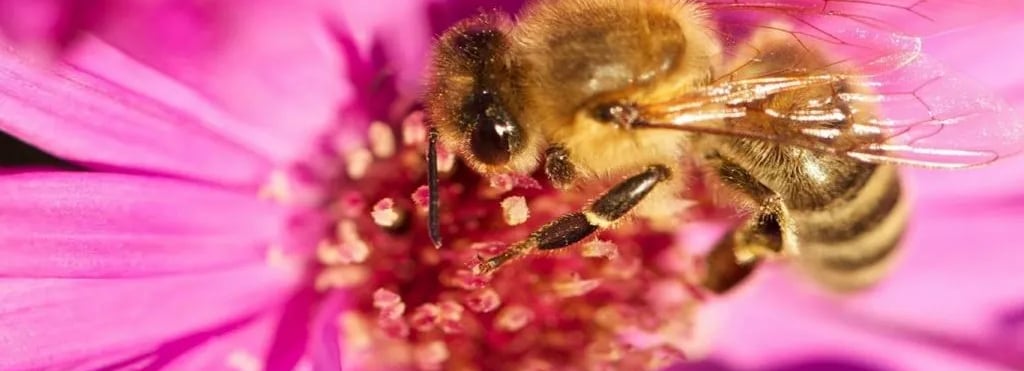
Perhaps even more intriguing are studies of invertebrates – insects, for instance, and whether they too, are capable of experiencing emotion. To test this idea, researchers placed some honeybees in a condition that simulated a predator attack. To prep the honeybees for the experiment, both groups of bees were trained to discriminate between two odours (i.e., learned to extend the proboscis to one odour followed by reward and not to extend to the proboscis to the other odour followed by less reward or punishment). They then induced vigorous shaking in these bees, replicating a situation in which the honeybees would have experiences if say, their colony was under threat. Another group of honeybees was left in an undisturbed condition. The researchers found that the agitated, shaken bees displayed more ‘pessimistic’ behaviour – they showed more hesitance and wariness when presented with ambiguous/intermediate odours. The researchers conclude by stating that the anxious honeybee group displayed a cognitive bias from being threatened, leading them to display more avoidant behaviours. Importantly, the shaken bees showed decreases in dopamine, octopamine and serotonin, which indicate depression in humans [4].
While we still don’t, strictly speaking, have concrete evidence that these are ‘emotions’ as we, as human beings experience and understand them as, these studies do make a persuasive case that non-human animals too, are capable of perceiving and experiencing something <em>akin</em> to emotion. Once we know about emotions in non-human animals, we might, as neuroscientist Gregory Berns suggests, refer to our four-legged friends as “non-human persons [5].” Thinking about emotions in non-human persons, then, means that they too, experience the highs and lows that accompany their emotions. Ultimately, this compels us to treat them with the same kindness we afford our fellow human beings.
Dr. Gentaro Shishimi is a Comparative Psychologist with a keen interest on cognitive abilities of bees. Not only does he like bees, but he also likes honey. In his free time he enjoys reading bee books, watching bee videos, visiting bee farms, tasting honey, or even thinking about bees. He drives his yellow “bee” car. He wishes that if he were lucky, he would be born in the next life as a selfless, divine worker bee rather than a drone bee……
We asked Dr. Gentaro Shishimi some questions about emotions in animals, and he shared some interesting views with us, particularly on honeybees, from his own research.
References
[1] Bekoff, M. (2008). The emotional lives of animals: A leading scientist explores animal joy, sorrow, and empathy--and why they matter. New World Library.
[2] Müller, C. A., Schmitt, K., Barber, A. L., & Huber, L. (2015). Dogs can discriminate emotional expressions of human faces. Current Biology, 25(5), 601-605. https://www.doi.org/10.1016/j.cub.2014.12.055
[3] Smith, A. V., Proops, L., Grounds, K., Wathan, J., & McComb, K. (2016). Functionally relevant responses to human facial expressions of emotion in the domestic horse (Equus caballus). Biology letters, 12(2), 20150907. https://doi.org/10.1098/rsbl.2015.0907
[4] Bateson, M., Desire, S., Gartside, S. E., & Wright, G. A. (2011). Agitated honeybees exhibit pessimistic cognitive biases. Current Biology, 21(12), 1070-1073. https://www.doi.org/10.1016/j.cub.2011.05.017
[5] Worrall, S. (2017). Dogs have feelings – here’s how we know. Available at: https://news.nationalgeographic.com/2017/09/dog-brain-feelings-mri-gregory-berns/ [Accessed 6th January 2018].
[6] Darwin, C. (1872). The expression of the emotions in man and animal. London: John Murray.
[7] Mendl, M. T., & Paul, E. S. (2016). Bee happy. Science, 353(6307), 1499-1500. https://www.doi.org/10.1126/science.aai9375
[8] Gibson, W. T.. Gonzalez, C. R., Fernandez, C., Ramasamy, L., Tabachnik, T., Du, R. R., Felsen, P. D., Maire, M. M., and Perona, P., & Anderson, D. J. (2015). Behavioral responses to a repetitive visual threat stimulus express a persistent state of defensive arousal in Drosophila. Current Biology, 25(11), 1401-1415. https://www.doi.org/10.1016/j.cub.2015.03.058
[9] Fossat, P., Bacqué-Cazenave, J., De Deurwaerdère, P., Delbecque, J. P., & Cattaert, D. (2014). Anxiety-like behavior in crayfish is controlled by serotonin. Science, 344(6189), 1293-1297. https://www.doi.org/10.1126/science.1248811
[10] Baracchi, D., Lihoreau, M., & Giurfa, M. (2017). Do insects have emotions? Some insights from bumble bees. Frontiers in Behavioral Neuroscience, 11, 157. https://doi.org/10.3389/fnbeh.2017.00157


What is the most convincing evidence you have come across so far that suggests that non-human animals are capable of experiencing and expressing emotions?
Contrary to what many people may think, I guess it would be convincing as well as surprising if animals which people believe are distantly related to humans clearly show emotions similar to ours. To me, such distant animals which could potentially show emotions are invertebrates. Darwin once described “Even insects express anger, terror, jealousy, and love by their stridulation [6].” Some people would take the statement as convincing because it reinforces our natural anthropomorphic tendencies as well as it was mentioned by such a notable and famous scientist. However, only recently has his statement been strongly supported by experiments using advanced neuroscientific and/or engineering techniques. These findings are “shocking” and reported in top journals. Bumblebees exhibited “optimistic” behavior which depended on dopamine after drinking unexpected, very sweet sugar water [7]. Fruit flies, which are often used for genetic and neural approaches, showed something analogous to human “fear” after seeing a moving shadow [8]. Stressed crayfish displayed “anxious” behavior whereby they came to avoid illuminated areas more likely and a serotonin level in their brain increased. Yet, their “anxiety” disappeared with chlordiazepoxide (CDZ), which can be used to reduce anxiety in humans [9]. Despite the amazing findings and claims in the invertebrate studies, to be fair, I should also mention that there are some researchers who criticize them [10]. It appears that emotions in invertebrates as wells as those in other non-human animals are still controversial.
Have you come across any evidence or observations of emotion in honeybees, from your research?
Yes, I have. When I was running experiments on honeybees, I often saw them “frustrated” or “agitated” by drinking water after experiencing very sweet sugar water, which would be the same behavior as in the shaking bee experiment described above. Nevertheless, at that time, I just focused on the similarity between honeybees and humans in terms of behavior and I did not have an idea of a similarity/difference in their mechanisms. Therefore, it is important that the shaking bee experiment showed not only the pessimistic behavior but also decreases in dopamine, octopamine and serotonin, which indicate depression in humans.
If our pets could tell us how they feel, what do you think they would say to us?
If we were not allowed to anthropomorphize our pets, the relationship between animals and humans would become so dry and colourless. Although I, as a comparative psychologist, understand danger of anthropomorphizing nonhuman animals in science, I personally would like our pets not only to show us affectionate behaviours but also tell us “I love you” as we do.