
When Art does not Imitate Life: The Distortion of Mental Health in Popular Media
In the effort to raise mental health awareness throughout the past decade, much attention has been placed upon popular media. The stigmatisation of toxic ideas through come-and-go trends begs the question: Are we really doing enough to correct misconceptions of mental illness? Guest author Lauren Chai helps us break down these tropes.
EMOTION SCIENCE ARTICLESGUEST ARTICLESSUGGESTED READS
Mental Health in the Media
Social media has a tremendous impact on one's perception of reality. Take the controversial 2015 advertisement selling weight-loss vitamins around New York City, which displayed a thin woman with a photoshopped body in a bikini selling weight-loss vitamins [1]. The caption asked if the viewer was “Beach Body Ready,” using the model as a measurement of one’s eligibility to go to the beach. The advertisement attracted almost immediate backlash for promoting unrealistic body shapes and promoting a toxic form of thinking. The belief that one’s measure of success was determined by looks enforces negative thinking towards oneself, lowering self-confidence. This growing conversation highlighted the fallacy in believing that only the so-called “elite” are beach body ready; only those with curves in specific places, flat stomachs and small waistlines are considered acceptable or worthy of societal approval. One may describe the online conversation that surrounds the body-positivity movement as “hyper-aware” of how media portrayal of the ideal actively degrades and diminishes everyday women to fit into an abstract box.
We see the consequences of stigmatising a false idea and normalising toxic environments, but the problem goes deeper. Consider the media’s influence on mental health awareness. In February 2012, popular microblogging site Tumblr announced that it will be banning blogs that promote self-harm, suicide, and pro-anorexia movements [2]. This was done in response to criticisms of the site allowing individuals to glorify such acts, instead of acknowledging its harmfulness. Unfortunately, these communities still linger in other parts of the internet, such as Pinterest and Tiktok. Examples of such images include slit arms with single drops of blood and “poetic” captions that equate self-harm to artful acts of resistance. More recently there the site has presented, “challenges” where young girls wear oversized shirts then pull it around their figures to reveal their waifish appearance. Popular films such as “Suicide Squad” have demonstrated this too, with the famous camera shot that pans up Harley Quinn’s body as she gets dressed, surrounded by ogling soldiers. “13 Reasons Why” portrayed suicide as a tool to seek revenge to one’s wrongdoers. In “The Queen’s Gambit,” child prodigy Beth Harmon’s version of an addiction relapse shows her dressed in chic clothing, perfectly styled hair, and dramatic makeup at best.
But let us consider something before we begin a “cancelling” spree. Can we place all the blame on films, TV shows and social media? Where does this “lazy writing” in tossing “sprinkles of crazy” to make the protagonist interesting come from? What makes these aesthetic Tumblr posts and meaningless Tiktok trends so influential? Why does the stigmatisation of mental health run so rampant, when we claim to have made strides in our awareness on the importance of mental health?
The Human Condition and Cognitive Biases
Social psychologists may attribute such tendencies to our cognitive schemas, defined as mental frameworks that help break down information into self-conceived categories so that it is less taxing on our cognitive resources [3]. Our cognitive schemas influence our tendency to take in knowledge that conforms with our pre-existing beliefs about an issue. We do not like our perceived truths to be challenged. Such pre-existing beliefs are especially useful to storytellers – who exploit them to build dramatic narratives, allowing others to immerse themselves in the fictional world and subsequently, evoking emotions associated with said cognitive schemas. Take the film “Split” whose antagonist suffers from the highly misunderstood Dissociative Identity Disorder (DID), kidnapped and imprisoned teenage girls. Like most extreme mental disorders, DID is highly misunderstood by the public and often believed to be a form of schizophrenia, although evidence and research disagrees on this. One of the antagonist’s personalities is known as “The Beast,” who has enhanced physical abilities and an “animalistic drive” to kill and eat its victims. This trope plays on the stereotype that individuals with extreme mental disorders are dangerous, despite evidence repeatedly demonstrating that DID is typically brought about through severe childhood trauma and those with the condition are more likely to harm themselves than others [4,5]. The film stigmatises individuals with the disorder as dangerous by associating them with monster-like characterisation. Similarly, associating depression with artful symbolism through media can increase suicide acceptance within a culture, impeding suicide prevention efforts.
Why then, are thematic ideas regarding mental health romanticised in popular fiction, manifesting as tropes in recent storytelling and social media? Perhaps such themes mirror our inherent obsession with exploring “the human condition,” a term found in classical works of philosophy, art, literature and theology. It describes every aspect, from personal experience to societal expectations; one’s growth to one’s challenges. You have probably thought about your own condition on multiple occasions. You may have thought, as you laid in bed, “Why do I exist?” “What’s the meaning of life?” As conversations surrounding mental health grows, it is natural to explore it in other forms – and, as storytellers love to do, push these ideas to their limit and explore its consequences through different lenses. Some may be cold and brutal. Others beautifully tragic. Our emotions play a role too; we connect with the characters, celebrate their successes, and empathise with their plight. It is so much easier to “understand” one’s mental illness when we receive context for their actions and behaviour, especially when the character is “likable.”
Hollywood and the Misrepresentation of Mental Health
We grow to like, and eventually see ourselves, in the fictional characters we know through art, drama, and music. A personal example of this was when I watched “The Edge of Seventeen” starring Hailee Steinfeld and Woody Harrelson. The coming-of-age story centred around a 17-year-old girl (what a surprise) navigating through her insecurities and living in the shadows of her older (and hotter) brother. As a 17-year-old at the time, I deeply related to Nadine’s (played by Steinfeld) plight. She saw herself as unattractive and unable to attract attention from her crush. She grew jealous of her older brother who she perceived as the family’s favourite child, becomes furious and feels betrayed when her best friend begins dating him. When her father passed away, she became depressed and took medication for it. She feels alone and begins to hate herself, telling her teacher she feels suicidal - the scene is framed in a “comedic” and awkward light, with the teacher acknowledging her comments as highly dramatic. And weirdly enough, I had to agree!
Nadine was portrayed by a beautiful actress and is written to be a quirky-but-awkward teen. She’s funny and intelligent - something I wished I could be. Although she did not realise it at first, boys did pursue her, namely Erwin (played by Hayden Szeto), the dorky and equally awkward boy-next-door who “sees Nadine for who she is,” Asian and has abs. Yes. I liked Erwin a lot. As with most films, Nadine and Erwin did get together in the end, conflicts with her brother and best friend were resolved, and all seemed good with the world. Film critics described the film as “cute” and “deeply” explored how one navigates the struggles of life. An article in the Guardian even described Nadine as “an abrasive teenager you can grow to love” [6]. The film depicted her illness and suicidal thoughts as something easy to overcome when you had everything you wanted – but this was not an accurate depiction of what most individuals with mental illnesses and suicide ideation experience. When a topic is placed in rose-coloured lights through one’s relatability to the character, the story’s build-up and ending, it reinforces the cognitive schema to build the perceived understanding of the topic.
References
[1] Hackman, R. (2015). Are you beach body ready? Controversial weight loss ad sparks varied reactions. The Guardian, available at: https://www.theguardian.com/us-news/2015/jun/27/beach-body-ready-america-weight-loss-ad-instagram
[2] Greenfield, R. (2012). Tumblr Has a Cutting (and an Anorexia and Bulimia) Problem. The Atlantic, available at: https://www.theatlantic.com/technology/archive/2012/02/tumblr-has-cutting-and-anorexia-and-bulimia-problem/331358/
[3] Dang, S., Sharma, P., & Shekhawat, L. S. (2019). Cognitive schemas among mental health professionals and other health professionals. Indian Journal of Psychological Medicine, 41(3), 258-265. https://dx.doi.org/10.4103%2FIJPSYM.IJPSYM_194_18
[4] Brand, B., & Pasko, D. (2017). Split is based on myths about dissociative identity disorder [Review of the film Split, by M. N. Shyamalan, Dir.]. PsycCRITIQUES, 62(18). https://doi.org/10.1037/a0040801
[5] Gillig, P. M. (2009). Dissociative Identity Disorder: A Controversial Diagnosis. Psychiatry [Edgmont], 6(3), 24-29. https://www.ncbi.nlm.nih.gov/pmc/articles/PMC2719457/
[6] Ide, W. (2016). The Edge of Seventeen review – an abrasive teen you can grow to love. The Guardian, available at: https://www.theguardian.com/film/2016/dec/04/the-edge-of-seventeen-abrasive-teen-you-can-love
[7] TED. (2009, October 8). The danger of a single story | Chimamanda Ngozi Adichie [Video]. YouTube. https://youtu.be/D9Ihs241zeg
Correcting Ours, and Public Misconceptions about Mental Health
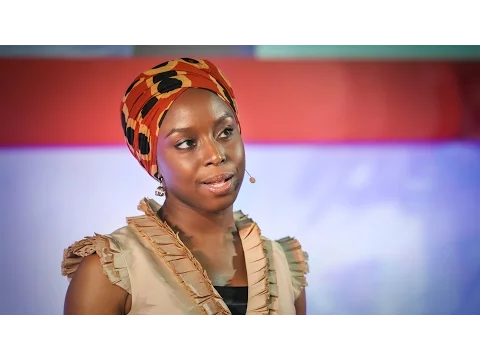
So what can we do about it? The challenge is that many of these stereotypes are deeply ingrained into our beliefs and culture through popular media. When little is known about the issue, people tend to turn to perceived authorities on the matter. In our technology-dependent world, information (and misinformation) spreads faster when the topic is sensationalised. News networks all want a piece of the pie to increase clicks and shares. When said incidences happen and there is little time for solid development in the investigation, opinions are tossed around based on unfounded assumptions or assertions. The novelist Chimamanda Ngozi Adichie quotes, “the single story creates stereotypes, and the problem with stereotypes is not that they are untrue, but that they are incomplete. They make one story become the only story.” [7]
However, as with anything we do not understand, proper education and openness to other possible answers can break down one’s preconceived notions. Much like a flashlight in a dark room, research may not be able to illuminate everything at once, but it gives us clues to understand the situations in front of us. Unfortunately, the research is not always accessible – those without a cursory understanding of the topic, terminology or even the structure of scientific reports are put off by the effort it takes to understand them. There is a great need for said knowledge to be available in a more accessible manner, using reliable sources. In regards to DID, one can learn more about the lives of systems through YouTube, such as channels “Dissociadid” and “Multiplicity & Me.” Furthermore, double-check information and don’t blindly consume and share pseudoscience. Just because an article claims it was “backed by psychologists,” doesn’t mean it’s so.
Finally, we need to begin acknowledge that our ‘truths’ do not always reflect reality and approach whatever we can with an open mind. We need to be willing to have those uncomfortable conversations to break down the stigma that surrounds mental health. There is no point in blindly pointing fingers at one another or the media. We won’t always be right, but we can take efforts to be less wrong. It is okay to make mistakes when dealing with sensitive topics. If your views don’t align with someone else’s, find out why! Have a friendly discourse. Change starts with us as individuals and empathy begins when we look outside of ourselves and our communities, and into the unknown.