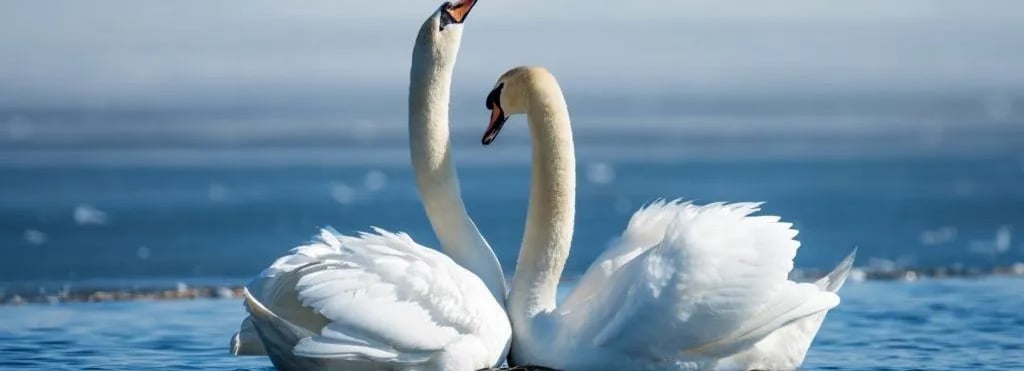
How Do I Love Thee? Let Me Count the Ways
Love has seen many expressions over time, from the romantic and passionate, to the companionate and comfortable. Is love really a choice? If so, how can we keep love in our most valued relationships alive? Read our article on what psychological science says about what is arguably our most human emotion.
EMOTION SCIENCE ARTICLES
Love in its Many Forms and Expressions
How do I love thee? Let me count the ways. How many ways can you express your love for someone? The opening phrase may be familiar to you. It is initially penned by Elizabeth Barrett Browning and can be found in the English poet’s most celebrated work, Sonnets from the Portuguese. Love then, and now, continues to be expressed through poems, artwork, songs and plays – but back in the mid-18th century, was especially celebrated through art and literature. Historians often point to this period in history as the age of Romanticism – a movement that shaped a large part of European society and culture. Romanticism was a reaction against rapid industrialization and modernization of the region during this time. Emotive, expressive artwork flourished – Caspar David Freidrich’s Wanderer above the Sea of Fog (1818) and Eugène Delacroix's Liberty Leading the People (1830) being two examples of masterpieces emerging from the Romantic period.
Fast forward another century or so and psychologists too, have weighed in, attempting to capture scientifically, the complexities and consequences of love. They first took to the task of defining and capturing what we mean when we say we love another. One definition of love considers it (quite simply) as “investment in the well-being of the other for his or her own sake [1].” It is not the most romantic or idealistic definition for sure. At best, some of us may begrudgingly admit to it being a sufficient definition of love. But such a banal definition also tells us something about how our ideas of love are shaped by what happened during the Romantic era more than two centuries ago. For this reason, we have long assumed and equated love to romance. It is this form of love that continues to be expressed in our modern-day literature – the feel-good happy-ever-after (HEA) or happy-for-now (HFA) endings we so often expect from our romance novels and romantic comedies.
But love is more than romance. While known for his work on the different forms of intelligence, the psychologist Robert Sternberg is equally (if not more) well-known for his Triangular Theory of Love. Sternberg proposes that 8 kinds of love exist, grouped accordingly to the presence or absence of three components of love: (i) intimacy (self-disclosure, closeness and feeling comfortably vulnerable to another), (ii) passion (physical and sexual attraction) and (iii) commitment (desire to maintain a long-term connection with the other) [2]. When all three components are present (intimacy, passion and commitment), we experience consummate love. It’s when one or more of the components are absent that give rise to different forms of love. Interestingly, Sternberg considers romantic love as one where intimacy and passion – but not commitment, are present. Think star-crossed lovers or whirlwind romances that don’t necessarily end with the couple being together as prototypical of such love. A love that has intimacy and commitment from both parties is termed companionate love – close friends and confidantes who seek to maintain a lifelong friendship might be a good example of such a love.
From the Passionate to the Companionate…
A comparable typology classifies love simply as being passionate (romantic) or companionate. Psychologists have examined the different effects of these classifications of love over time. One study by Susan Sprecher and Pamela Regan showed that passionate love is much more likely to be sexualized, supporting the claim that heightened romantic attraction is also typified by strong physical attraction. The authors find that over time, however, that passionate love declines, and that companionate love was more likely to be associated with relationship satisfaction [3]. The work aligns with that of anthropologist Helen Fisher, who, through a series of studies, found that early-stage romantic love was associated with brain reward systems, activating dopamine-rich regions of the brain [4]. In simpler terms, the initial rush of love and romance (or that ‘falling in love’ experience) can be observed in our brain activity. Our brains fire up a potent dosage of chemicals aimed to move us quickly from the candlelit dinner to the bedroom. It should perhaps come as no surprise that the initial rush of dopamine to our reward centers are, neurologically speaking, what causes us to think of our crushes and infatuations as ‘rewards’ – we clamour to see them, each glimpse or moment we spend with them triggers a powerful chemical release most of us find pleasurable and intoxicatingly addictive.
But when the initial physical attraction subsides, and given time and familiarity with our partners, the passionate often changes to something a little more stable and permanent – referred to by psychologists as companionate love. In contrast with the colourful, exciting chaotically exhilarating rush that is typical of romance novels, companionate love is the quiet, gentle, slightly-more-subdued-but-no-less-important cousin of romance. In fact, you might even find it a welcome change to the heady heights of passion that initially defined the early stages of your romantic relationship. An analysis of more than 25 studies shows that romantic love when expressed obsessively – was negatively associated with both short-term and long-term romantic satisfaction [5]. Companionate love, in contrast, is seen to be more predictive of long-term relationship satisfaction than romantic love – a finding that holds across culture and gender [6]. And the not-so-good news? Both forms of love appear to decline over time – a conclusion drawn by Elaine Hatfield and her colleagues when they examined the effects of time on the love between newlywed and long-term marriages. Much to their surprise, time had “a corrosive effect” on both passionate and companionate love. Happily-ever after, sadly, seems confined to fairy tales, at least based on these findings.
…and perhaps More Importantly, to the Compassionate
But perhaps love is something that we can choose to have – to experience and share, if we do enough to keep romance, commitment – and most importantly, kindness, in our relationships. A recent series of studies point to another form of love not highlighted in previous research – compassionate love. Compassionate love is defined here as, “a form of altruistic, caring love that emphasizes concern for the other’s well-being [8].” You may recall from the definition earlier that, as mundane and unexciting such as definition is, it is perhaps this form of love that sustains relationships in the long-term. We confess to loving not because someone is. We confess to loving just because the well-being and happiness of the other are all that matters for our own happiness.
While research on compassionate love is still in its infancy, some initial research shows that compassionate love promotes sustained relationship satisfaction. Harry Reis and colleagues found that compassionate acts, performed over two weeks, contributed to newlyweds’ relationship satisfaction. Importantly, this satisfaction was independent of overall positive or negative behaviour, suggesting that compassionate love helps us weather the ups and downs typical of any romantic relationship. Another study showed that compassionate love enhances empathy and attention toward our partners’ distress, which subsequently motivates support toward our partners [9]. And the effects of compassionate love can be seen in studies showing how expressions of kindness and concern to one’s partner lead to long-term relationship satisfaction. Sampling older couples, Allan Sabey and colleagues found that compassionate love partially facilitated the association between perceived sacred qualities of marriage with marital satisfaction. That is, the link between couples committed to the sacred matrimonial ideals of marriage and their overall relationship satisfaction was partly explained by expressions of compassionate love. All things considered, the results from studies on compassionate love appear to paint a simple, yet profound claim: The choice to be kind is a choice to love, and to be loved.
References
[1] Hegi, K. E., & Bergner, R. M. (2010). What is love? An empirically-based essentialist account. Journal of Social and Personal Relationships, 27(5), 620-636. https://doi.org/10.1177/0265407510369605
[2] Sternberg, R. J. (1986). A triangular theory of love. Psychological Review, 93(2), 119-135. https://psycnet.apa.org/doi/10.1037/0033-295X.93.2.119
[3] Sprecher, S., & Regan, P. C. (1998). Passionate and companionate love in courting and young married couples. Sociological Inquiry, 68(2), 163-185. https://doi.org/10.1111/j.1475-682X.1998.tb00459.x
[4] Aron, A., Fisher, H., Mashek, D. J., Strong, G., Li, H., & Brown, L. L. (2005). Reward, motivation, and emotion systems associated with early-stage intense romantic love. Journal of Neurophysiology, 94(1), 327-337. https://doi.org/10.1152/jn.00838.2004
[5] Acevedo, B. P., & Aron, A. (2009). Does a long-term relationship kill romantic love? Review of General Psychology, 13(1), 59-65. https://doi.org/10.1037/a0014226
[6] Kim, J., & Hatfield, E. (2004). Love types and subjective well-being: A cross-cultural study. Social Behavior and Personality: An International Journal, 32(2), 173-182. https://doi.org/10.2224/sbp.2004.32.2.173
[7] Hatfield, E. C., Pillemer, J. T., O'Brien, M., & Le, Y. C. L. (2008). The endurance of love: Passionate and companionate love in newlywed and long-term marriages. Interpersona: An International Journal on Personal Relationships, 2(1), 35-64.
[8] Reis, H. T., Maniaci, M. R., & Rogge, R. D. (2014). The expression of compassionate love in everyday compassionate acts. Journal of Social and Personal Relationships, 31(5), 651-676. https://doi.org/10.1177/0265407513507214
[9] Collins, N. L., Kane, H. S., Metz, M. A., Cleveland, C., Khan, C., Winczewski, L., ... & Prok, T. (2014). Psychological, physiological, and behavioral responses to a partner in need: The role of compassionate love. Journal of Social and Personal Relationships, 31(5), 601-629. https://doi.org/10.1177/0265407514529069
[10] Sabey, A. K., Rauer, A. J., & Jensen, J. F. (2014). Compassionate love as a mechanism linking sacred qualities of marriage to older couples’ marital satisfaction. Journal of Family Psychology, 28(5), 594-603. https://psycnet.apa.org/doi/10.1037/a0036991