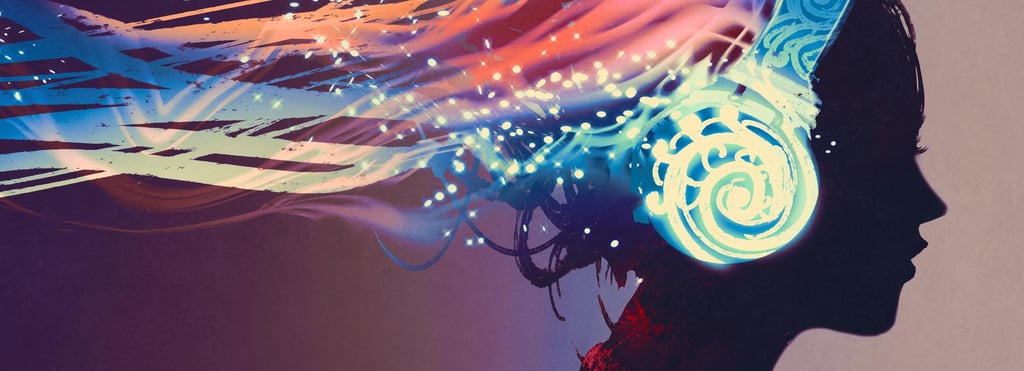
Feeling the Right Tune: How Music Enhances Emotion Regulation
Music has long helped us tell stories of our experiences and our emotions. Recent developments in the field of the positive humanities show that listening to or creating music enhances our well-being. Our third article on human culture and well-being highlights how and why music helps us regulate our emotions. With music, we can choose the emotions we want to feel, making it a healthy approach to enhancing our well-being.
EMOTION SCIENCE ARTICLESSUGGESTED READS
The Emotions in Tune, Tone, and Tempo
You would be hard-pressed to find someone who doesn’t enjoy any form of music. We find ourselves belting out our favourite tunes in the shower, whistling while we work or singing along with friends at karaoke. Music is humanly organized sound – an artistic way of communicating stories, emotions, and shared human experiences through melody, harmony, and rhythm [1]. Whether we choose to simply immerse ourselves in a good song, or create music ourselves, music has long been part of human history and culture as a universal language of our most human of experiences. It is perhaps for this reason that the majority of our songs are about love and relationships. One study showed that from the 1960s to 2010, most US Top 40 songs – a whopping 97.2%, revolved around themes of love, relationships, and sex/sexual desire [2].
We use music to convey our experiences in a way that extends beyond the lyrics in the song itself. The emotions residing in song galvanize human thought and action. Music is used in ceremonies, military parades, and religious rituals, making it an integral part of many customs and traditions. You might also find it easy to recall the song that best reminds you of major life events – music ‘bookmarks’ momentous occasions that accompany our most vivid memories of life and death, gain and loss, or pain and pleasure. Our formative adolescence and young adulthood years are more likely to be characterized by a myriad of such experiences. It may be one of the reasons why you can more easily recall songs that defined your late adolescence and young adult years more so than any other major time point in your life [3].
Music as a Facilitator of Healthy Emotion Regulation
Recent work in the positive humanities, along with much of the psychological research on music shows that music has the power to enhance our well-being – and does so by influencing our emotions. When we listen to music or choose specific songs to accompany our day, we are inadvertently using structured, artistic expressions of sounds to regulate our emotions [4]. Emotion regulation is the ability to consciously, and deliberately choose one’s emotional experiences [5]. Music can help encourage us to manage our emotions in a healthy, adaptive way. Listening to a song that speaks to our personal experiences of separation, longing, love, and connection helps us make sense of our emotions – a process known as cognitive appraisal. When we listen to songs that mirror our experiences, music helps give form to our unspoken, abstract emotion states. We feel that the song understands us, speaks to us, and mirrors our feelings. Ultimately, this can help us make better sense of our experiences; the sense that we are understood through song is a powerful way to help us make sense of our lives [6].
The use of music to regulate our emotions may be more important in the context of challenging circumstances – those fraught with challenging emotions that threaten to negatively affect our well-being. Consider some of the studies conducted on how people engaged with music during the COVID-19 pandemic. Lockdowns and movement restrictions brought along with it another epidemic – one of isolation and loneliness. Studies conducted during this time showed that when people used music to promote healthy, adaptive thoughts over pessimistic ones, they reported an increase in positive emotions and mood, and overall, greater well-being [7]. Music also has the power to help bond people around the world. No better scene encapsulates the moving, powerful sense of common humanity during the pandemic than the sight of people playing music from their homes or coming together online to sing together. Perched from the balconies of their homes, people the world over expressed solidarity with their neighbours, friends, and healthcare workers through song, as humanity navigated through the unprecedented health crisis [8]. Music speaks to our emotions – both the pleasant, and unpleasant. As long as people choose to connect with and use music to reinterpret their challenging emotions in a healthy, constructive manner, they can report higher levels of well-being – even when listening to sad songs [9].
A Playlist for Well-being
Research in the psychology of music offers some suggestions on how you might engage with music for well-being. In general, upbeat, and energetic tunes are more likely to elicit positive emotions. Go for your foot-tapping, head-bobbing favourites if you wish to feel more positive emotions [10]. Understandably, you may not be feeling or wanting this positivity all the time – so slower-tempo, sadder songs might be preferred if you need a tune to help you feel comforted. Finally, a familiar song helps – one study showed that the songs you already know are more likely to activate brain patterns that facilitate effective emotion regulation [11]. There is something to be said about the anticipatory delight of your favourite song as it crescendos into that memorable and catchy chorus.
The research is clear in showing that music helps us better regulate our emotions. Our favourite song not only reflects our sentiments but also enhances our ability to choose the emotions we would prefer to feel. You might already do this – but a useful suggestion for helping you tailor your choice of music for your well-being is to create a different playlist for different experiences. A playlist of energetic up-tempo beats to spur enthusiasm and motivate action. A kind, reaffirming set to encourage self-kindness and self-forgiveness. A down-tempo, contemplative selection to prompt nostalgia and remembrance of valued past experiences. The infinite possibilities for combinations of songs for your well-being playlists means that there will be a song composed and written for every imaginable human emotion and experience. If your life were a playlist of songs, what tracks would you find on them? Which would you listen to most frequently?
References:
[1] Godt, I. (2005). Music: A practical definition. The Musical Times, 146(1890), 83-88. https://doi.org/10.2307/30044071
[2] Christenson, P. G., de Haan-Rietdijk, S., Roberts, D. F., & ter Bogt, T. F. (2019). What has America been singing about? Trends in themes in the US top-40 songs: 1960–2010. Psychology of Music, 47(2), 194-212. https://doi.org/10.1177/0305735617748205
[3] Rathbone, C. J., O’connor, A. R., & Moulin, C. J. (2017). The tracks of my years: Personal significance contributes to the reminiscence bump. Memory & Cognition, 45, 137-150. https://doi.org/10.3758/s13421-016-0647-2
[4] Westgate, E.C., & Oishi, S. (2022). Art, music, and literature: Do the humanities make our lives richer, happier, and more meaningful? In L. Tay & J.O. Pawelski (Eds.), The Oxford handbook of the positive humanities (pp. 85-89). Oxford University Press. https://doi.org/10.1093/oxfordhb/9780190064570.001.0001
[5] Gross, J. J. (2015). Emotion regulation: Current status and future prospects. Psychological Inquiry, 26(1), 1-26. https://doi.org/10.1080/1047840X.2014.940781
[6] Van Goethem, A., & Sloboda, J. (2011). The functions of music for affect regulation. Musicae Scientiae, 15(2), 208-228. https://doi.org/10.1177/1029864911401174
[7] Hennessy, S., Sachs, M., Kaplan, J., & Habibi, A. (2021). Music and mood regulation during the early stages of the COVID-19 pandemic. PloS One, 16(10), e0258027. https://doi.org/10.1371/journal.pone.0258027
[8] Taylor, A. (2020). Music and encouragement from balconies around the world. The Atlantic. Accessed at https://www.theatlantic.com/photo/2020/03/music-and-encouragement-from-balconies-around-world/608668/
[9] Fink, L. K., Warrenburg, L. A., Howlin, C., Randall, W. M., Hansen, N. C., & Wald-Fuhrmann, (2021). Viral tunes: Changes in musical behaviours and interest in coronamusic predict socio-emotional coping during COVID-19 lockdown. Humanities and Social Sciences Communications, 8, 180. https://doi.org/10.1057/s41599-021-00858-y
[10] Cook, T., Roy, A. R., & Welker, K. M. (2019). Music as an emotion regulation strategy: An examination of genres of music and their roles in emotion regulation. Psychology of Music, 47(1), 144-154. https://doi.org/10.1177/0305735617734627
[11] Moore, K. S. (2013). A systematic review on the neural effects of music on emotion regulation: Implications for music therapy practice. Journal of Music Therapy, 50(3), 198-242. https://doi.org/10.1093/jmt/50.3.198