Cute Aggression and Tears of Joy: The Science behind Dimorphous Expressions
You may have expressed cute aggression in response to something unbearably adorable, or expressed 'tears of joy' to a deeply moving, positive experience. But why do we express intense emotions in such unusual ways?
EMOTION SCIENCE ARTICLES
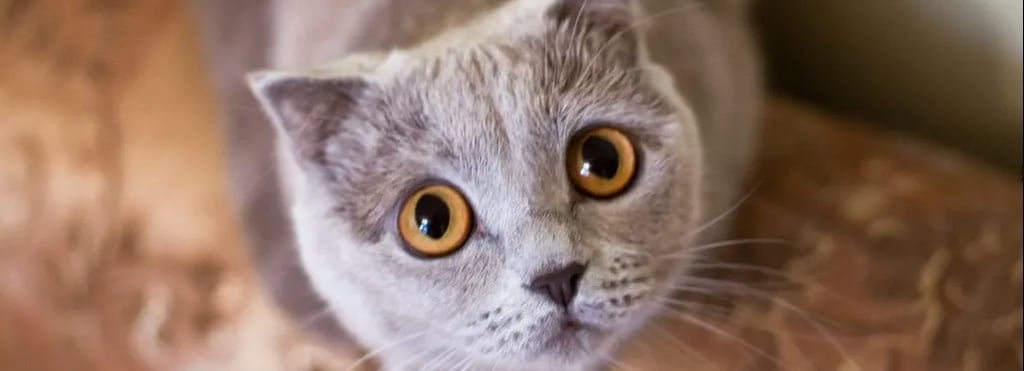
If you search for the terms “cute kitten” on YouTube, you get about 8 million results. Try watching one of those videos now. Or if puppies are your thing, do a search for “cute puppy” – and make your choice from the 9 million possible options available. If the sheer number of videos featuring our furry domesticated friends are anything to go by, we do have a fascination, or obsession even, with cute baby animals. Psychologists studying cuteness, and the features that represent what they term a 'baby schema' - a large head, round face and large eyes - find that these are prototypical of youthfulness and harmlessness [1]. Importantly, such cues prompt caretaking and motivate intentions to nurture and protect the cute kitten, puppy, or baby.
You may have, however, expressed your fondness for the cute object or being in a different way. Did you feel like squeezing, grasping tightly, or even biting that cute kitten? Verbal expressions that typically accompany such feelings include “wanting to squeeze the life out of this cute kitten,” “pinch the cheeks of that adorable baby” or simply “so cute I want to eat him/her up” (all not literally, thankfully). This seems rather unusual – aggressive, even, when cute objects are supposed to instead elicit caretaking and nurturance. Psychologists have only recently examined why we have such experiences. The expressions and intentions that we have – biting, squeezing, pinching, appear – harming the target, pretty much, appear to be opposites of caring and nurturing. These ‘opposite reactions’ are called dimorphous expressions, resulting from experiences of intense positive emotions. Put another way, experiencing intense positive emotions can at times motivate behaviours and expressions typically associated with negative emotions – or vice versa.
A series of studies, led by Oriana Aragón, showed that dimorphous expressions can be demonstrated in experimental settings. Aragón and colleagues showed two sets of pictures of cute babies to participants, with one set of pictures digitally modified to highlight more infantile features. Participants who were shown pictures of babies with more infantile features reported higher intentions to engage in ‘playful aggression.’ They were also likely to acknowledge engaging in behaviours typically associated with anger – clenching their fists and gritting their teeth, for instance. The researchers then conducted a follow-up study and found similar results, and explained that dimorphous expressions serve to regulate intensely positive emotion, stabilizing the care-taker’s heightened positive emotions to a more manageable level [2].
In another study, Aragón got participants to watch a video of a man displaying great generosity, but, as with any experiment, the researcher manipulated the endings of the video to show that the man either lived a long and happy life, or had his life cut tragically short. The participants then provided responses to a series of questionnaires on their emotions, how they appraised the situation in the video, as well as reasons for why they might have smiled or cried while watching the video. Results of this study provided evidence for dimorphous expressions. One of the study’s participants even tearing up watching the man’s generosity and kindness. The results from this study provide some explanation for why we cry ‘tears of joy’ – the intense, or overwhelming positive emotions we experience is balanced out by expression typically associated with an opposite, negative emotion state. In this video, observing acts of moral excellence – extreme kindness, for example, can tears, rather than smiles. We can view the same stimuli and appraise it the same way, experience the same emotions, and yet, have two distinct expressions resulting from the event [3].
The science of dimorphous expressions is still in its infancy, and there’s still a lot more that can be studied in this area. We still don’t quite know all the reasons why some people laugh at funerals, or when they are fuming in rage – but if the results from these initial studies are anything to go by, it’s a way in which we regulate strong emotions. These expressions are involuntary, and likely to be largely uncontrollable – but the science seems for now seems to suggest that they are a healthy expression of our in-built emotional regulation mechanism.
References
[1] Glocker, M. L., Langleben, D. D., Ruparel, K., Loughead, J. W., Gur, R. C., & Sachser, N. (2009). Baby schema in infant faces induces cuteness perception and motivation for caretaking in adults. Ethology, 115(3), 257-263. https://doi.org/10.1111/j.1439-0310.2008.01603.x
[2] Aragón, O. R., Clark, M. S., Dyer, R. L., & Bargh, J. A. (2015). Dimorphous expressions of positive emotion: Displays of both care and aggression in response to cute stimuli. Psychological Science, 26(3), 259-273. https://doi.org/10.1177/0956797614561044
[3] Aragón, O. R. (2017). “Tears of joy” and “tears and joy?” personal accounts of dimorphous and mixed expressions of emotion. Motivation and Emotion, 41(3), 370-392. https://doi.org/10.1007/s11031-017-9606-x